
Copycat Scaling Meta Creatives
An integrated platform that unifies content and ad-generation into one ecosystem — cutting creative production time by 75% and unlocking massive scale for the growth team.
Scaling creative production for Meta acquisition
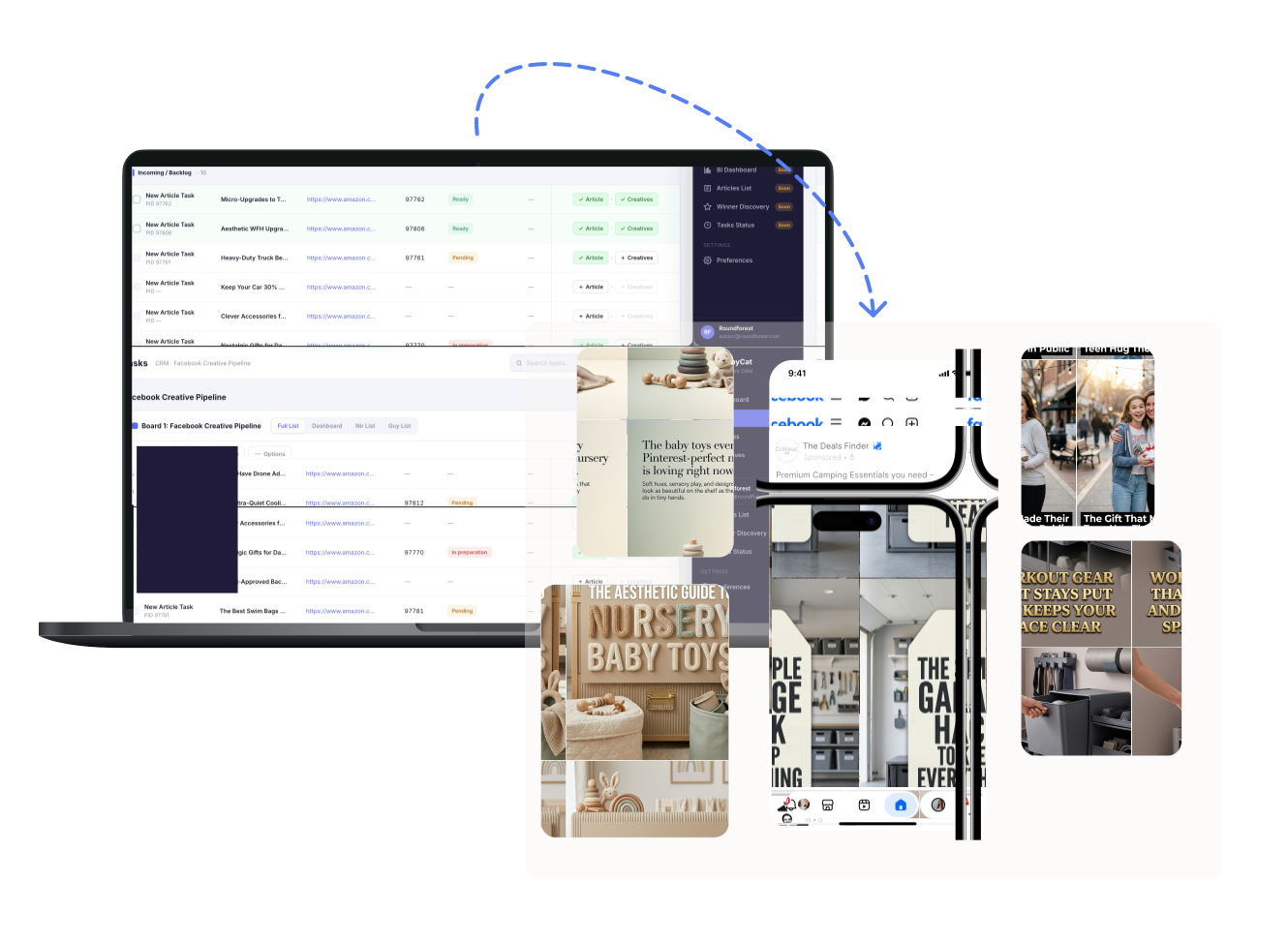
Profitable Meta acquisition at Roundforest relies on testing a massive daily volume of ad creatives. I led the UX/UI design for CopyCat – an internal, AI-driven platform – to solve a severe operational bottleneck. The team struggled with a fragmented, six-tool workflow while trying to hit their ROAS goals. The challenge was transforming this disconnected process into a single, automated ecosystem to drastically scale production.
Challenge →
Creative production was capped at 70–100 creatives per day, while reaching profitability required 300+. A fragmented workflow across six different tools made scaling slow and inefficient.
Strategy →
I embedded with the Meta team for two weeks, mapped the end-to-end workflow, and redesigned it as one unified platform – consolidating tools, automating repetitive tasks, and keeping human review where it mattered.
Results →
Reduced content production time by 75%, consolidated 6 tools into 1, and eliminated 36 manual clicks through automation.
The core challenge
Creative production was fully manual and couldn’t keep up with the scale the funnel demanded.
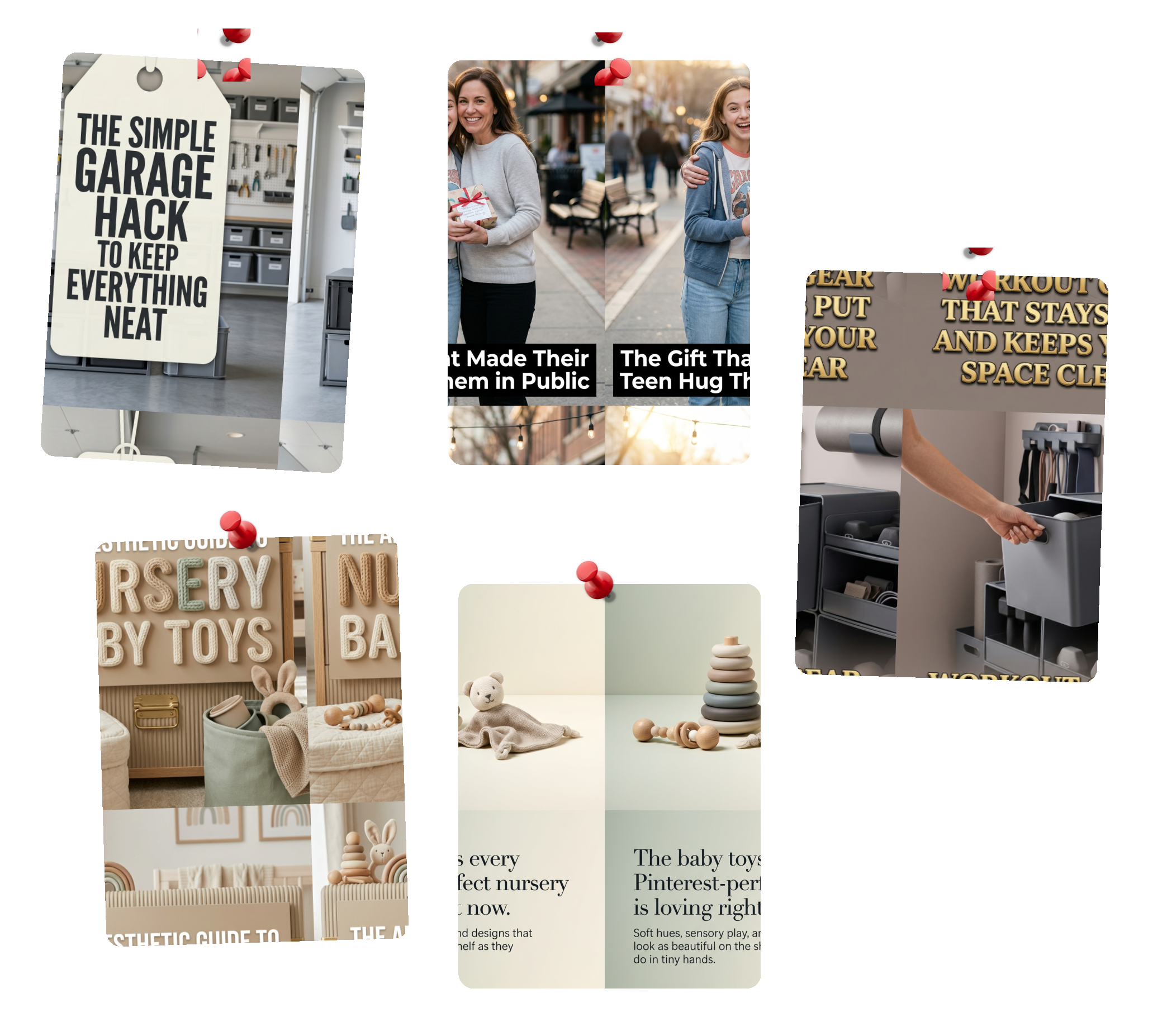
A faster process that became harder to run
If we fix efficiency, we can at least double output.
Two weeks embedded with the Meta team
I conducted an immersive research process by joining the Meta team for two weeks. This hands-on approach was critical – it let me experience the workflow from the inside rather than from the outside.

It allowed me to:
I documented:
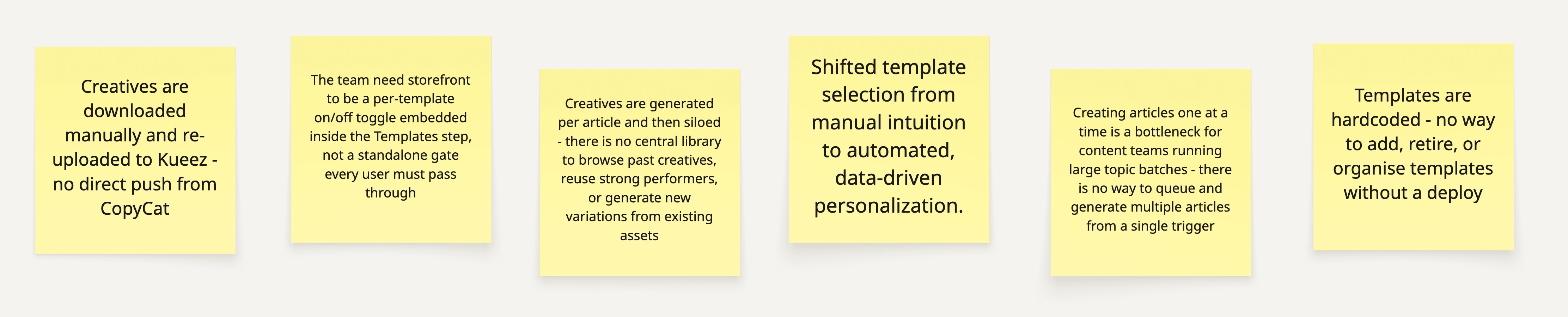
A sneak peek at field notes captured while collaborating with the team.
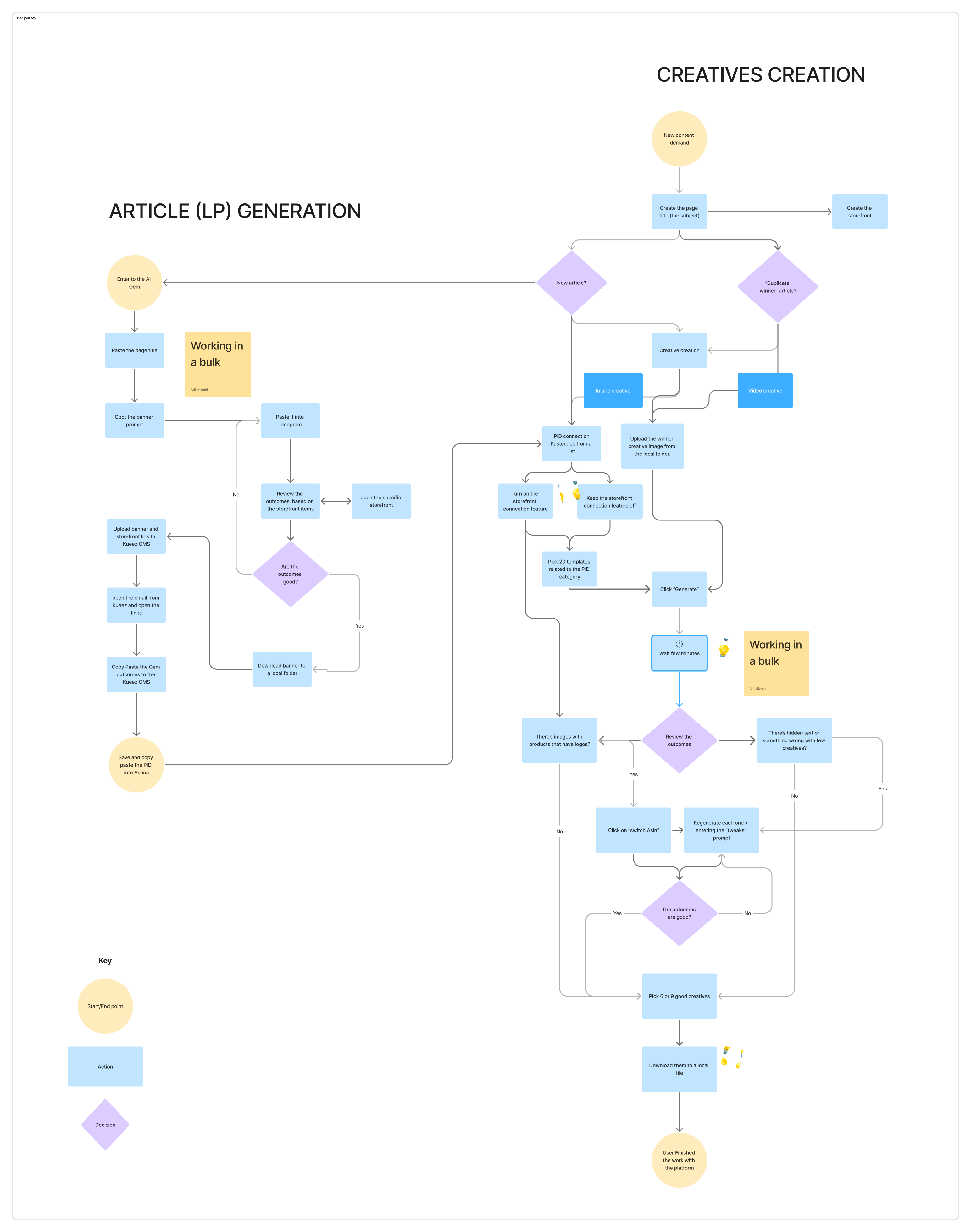
Mapping the full workflow
After onboarding, I mapped the full workflow – from content ideation to campaign launch. This helped surface where the process broke down.
A platform, not just a generator
I approached the system as a holistic platform, not just a creative generator. Three principles guided every decision:
Unify →
Bring all tools into one system, replacing six disconnected steps with a single continuous flow.
Automate →
Automate everything possible – data handling, layout, and asset generation – to remove manual work.
Review →
Keep human review where it matters, protecting quality on high-sensitivity decisions.
One task list that drives the whole flow
The system is built around a task & content list – the starting point of the daily workflow. Each task includes article (landing page) generation and creative generation. The system pulls all relevant data directly from each task, enabling a seamless flow from idea to live campaign.

Title syncs, AI pre-populates copy & banner.
PID & metadata auto-passed into the pipeline.
Human sign-off; task row turns green when done.
Interactive Prototype
Generate an article to unlock the creative builder and test the automated flow firsthand.
Key Design Decisions
Interactive Prototype – creatives generation flow
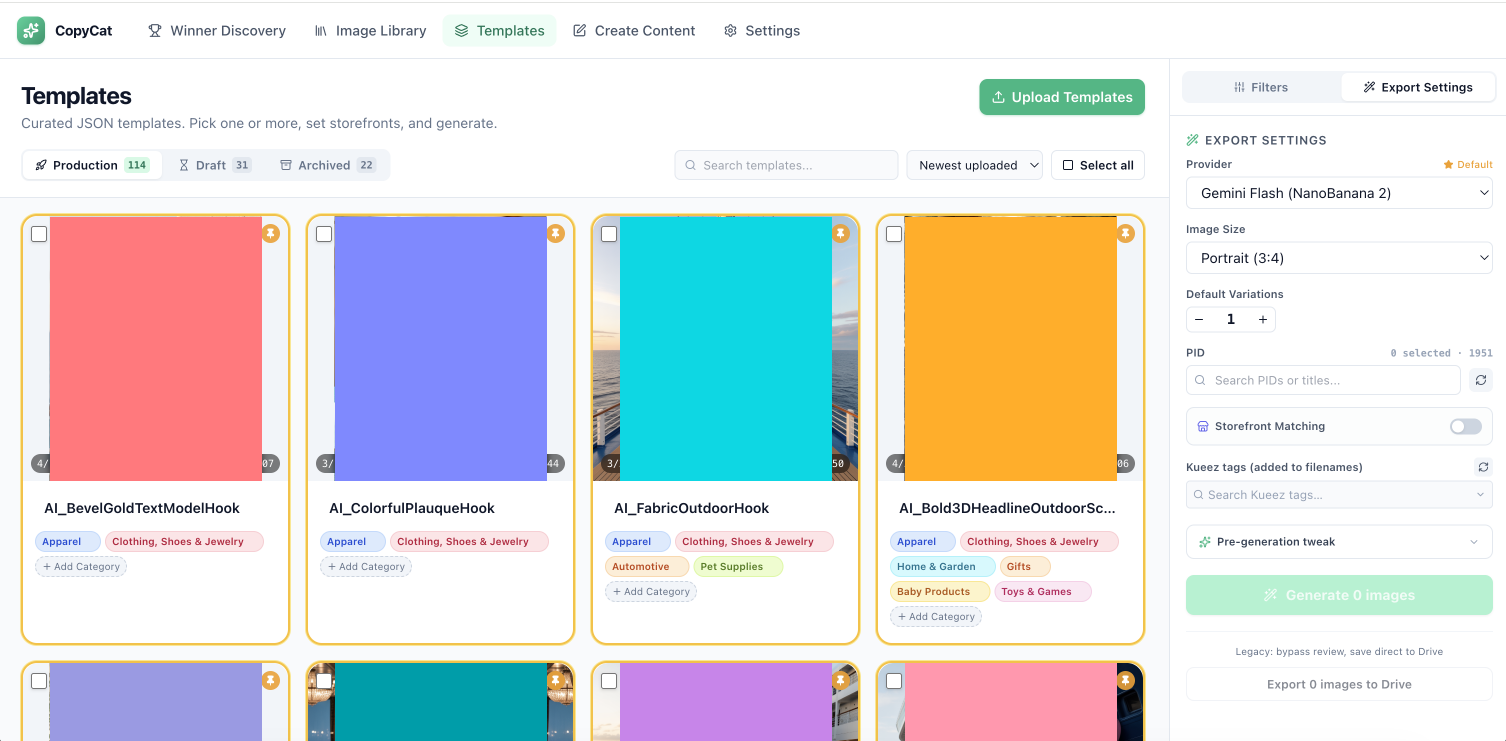
Designed a structured, step-by-step creation flow that eliminates human error and keeps team members from missing critical steps. Compared to the previous legacy process, this streamlined approach significantly reduces clicks and manual actions.
You can try it out.
The Impact
While we made numerous platform enhancements, this specific change was a major turning point. It significantly reduced workload for the team, enabling us to scale production and deliver a high-impact transformation for Meta.
What's Next?
This is an early stage of a broader vision. Future iterations expand CopyCat from a production tool into a full operating system for acquisition: