← Back to work
IDF · Oketz unit·Freelance · Field assessment

Replacing pen-and-paper scoring with a live tablet system for an elite military unit.

My role
Solo Product Designer
Freelance · Research · UX · UI · Prototyping
Team
1 Behavioral Commander · 1 Engineer
Design · Behavioral · Engineering
Duration
6 months
End-to-end engagement

TL;DR

Background
Oketz, the IDF's elite canine unit, selects its candidates in an intense sorting camp held once a year.
Problem
Assessors scored candidates on paper at separate stations, then needed a 3-hour cross-department meeting to align the results.
Approach
Field research at the camp, then a tablet app built around the camp's own flow: candidate, group, station, board review.
Outcome
The 3-hour sync meeting shrank to 30 minutes. No paper logs, and live candidate scores for assessors for the first time.
30 min3 hrs
end-of-camp sync meeting, down from 3 hours
Live
candidate scores, for the first time
0
paper logs at the camp
Background

One camp a year. Decisions that shape a soldier's path.

Unit.e.p is a custom evaluation platform for Oketz, the IDF's elite canine unit. It runs their annual candidate sorting camp: mapping candidates, groups and stations, and calculating rankings live instead of after the camp ends.

Problem

Every score lived on paper until the camp was over.

Assessors tracked fast-moving candidates by hand, under field conditions, and only combined their data at the very end.

Paper forms

Every parameter written by hand, at each separate station.

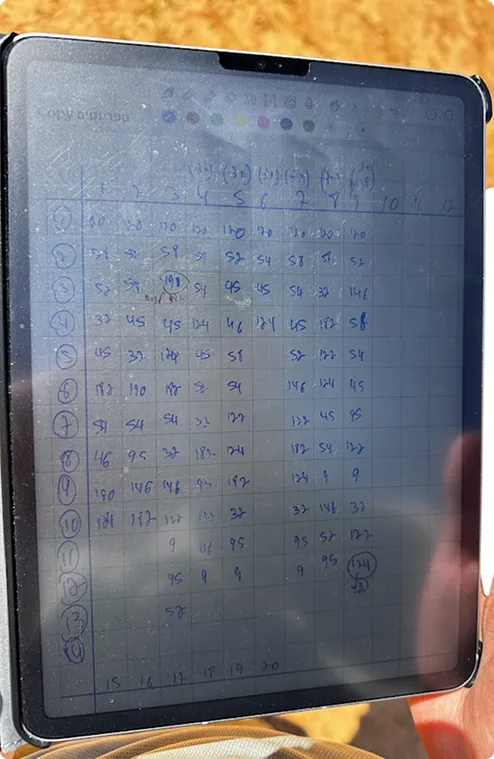
Hand-drawn sprint tables

At the sprint station, assessors scribbled circles and numbers to track arrival order.

A 3-hour sync meeting

All departments aligned the results manually at the end of camp. The core bottleneck.
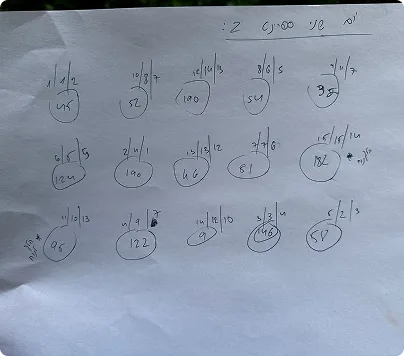
Handwritten score sheet
Paper log on a clipboard
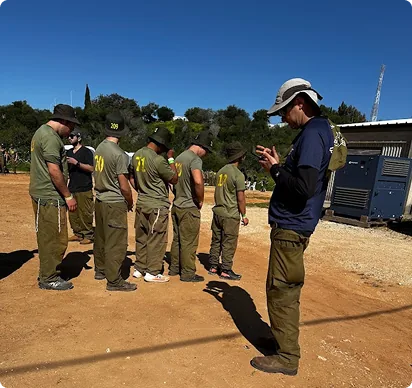
Assessors with candidates in the field

Before: handwritten logs, drawings and un-synced spreadsheets.

Research

I watched the camp run before designing anything.

I interviewed the camp's director board, commanders and assessors, then observed the live sorting camp on the ground. That's where I saw exactly where paper failed, like the sprint station's hand-drawn race order.

Affinity map of field notes
Field notes organized into an affinity map, which became the user flow
Exploration

Three ways to lay out the evaluation page.

I sketched by hand to get every idea from research onto paper and see what worked: how the candidate list is arranged, and what depends on what.
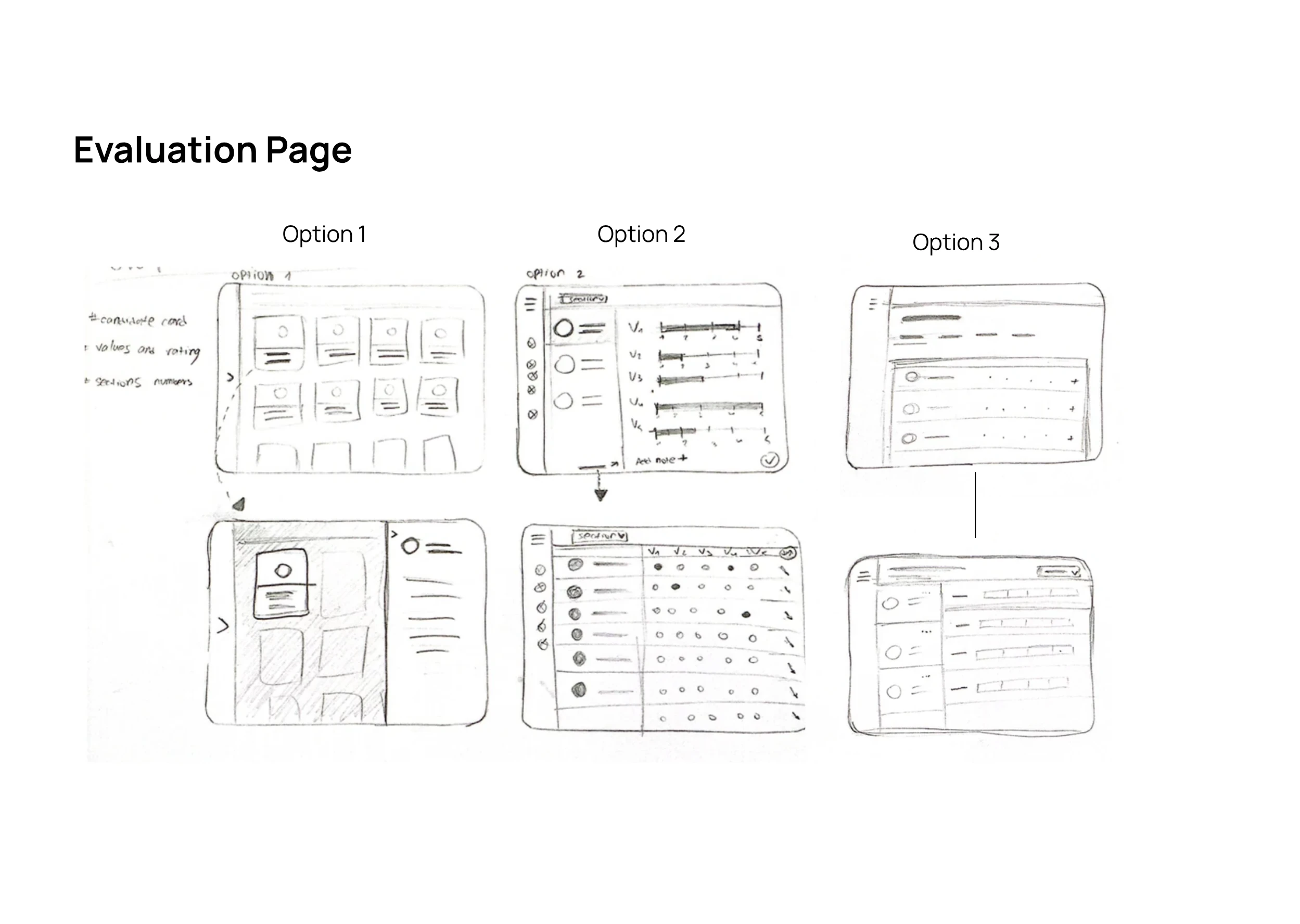
Evaluation page sketches, three options
Iterations

From a familiar table to a flow built for the field.

I anchored the interface on the camp's real journey, which turned complex data entry into simple steps.
Candidate→Group assignment→Station observations→Final board review
Iteration 1

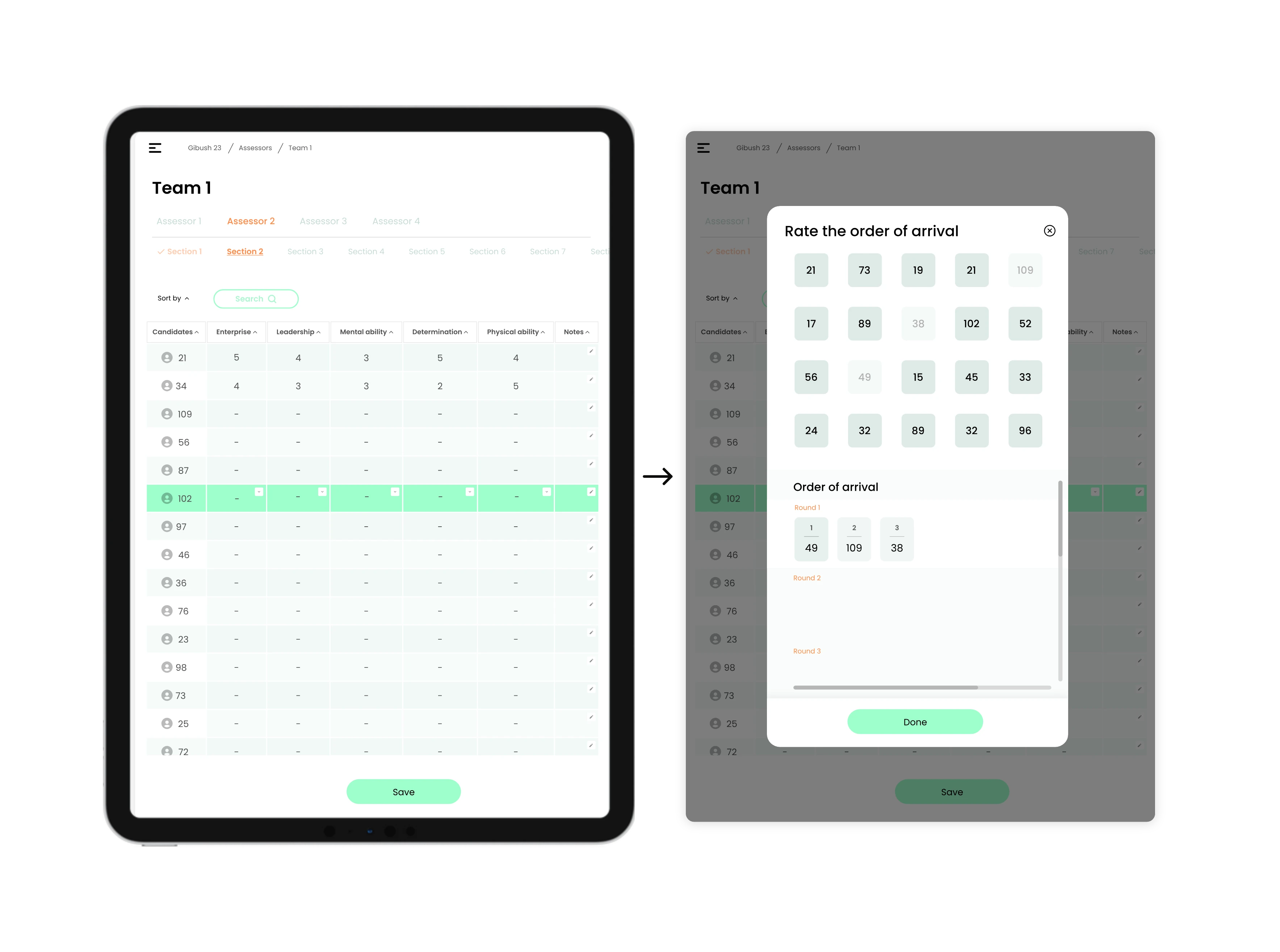
A familiar grid

First iteration: candidate grid and arrival-order modal
Familiar, like tools they already knewDidn't fit the activity in the fieldNo navigation
Final

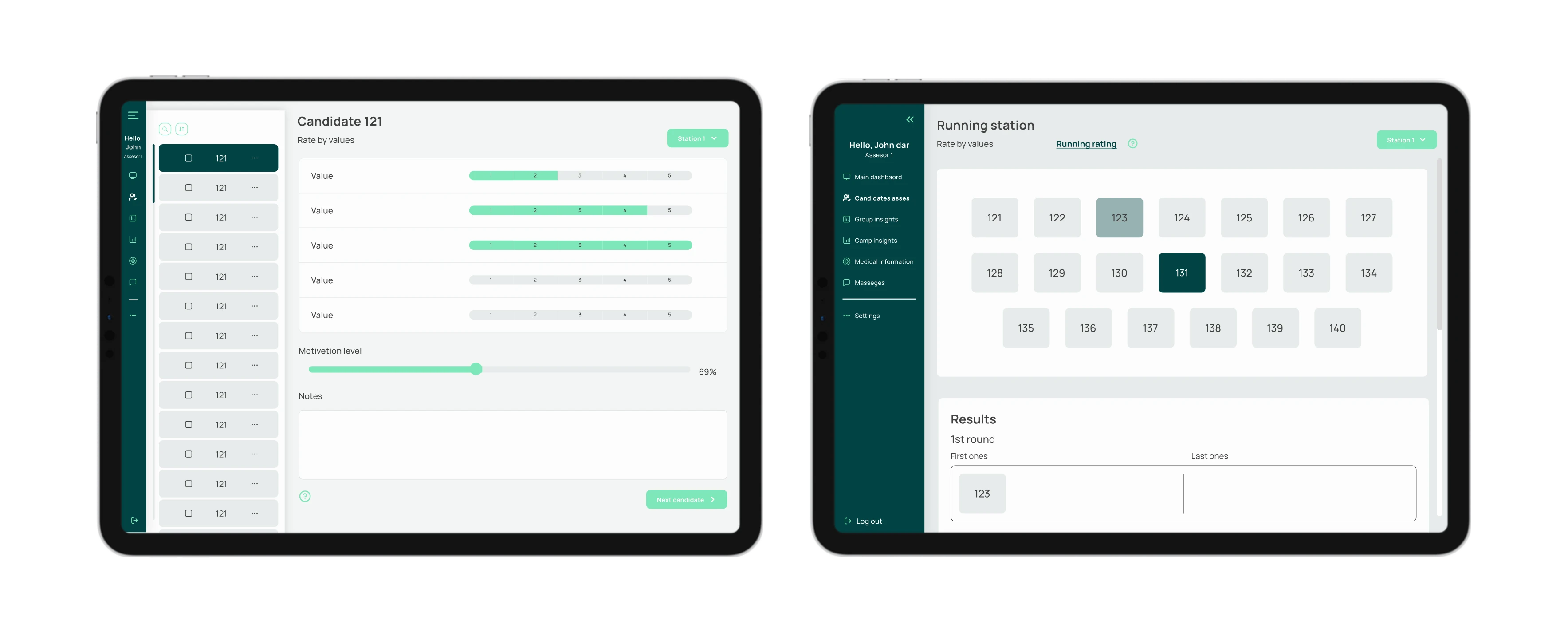
Side navigation, a candidate list, and the station on one screen

Final iteration screens
Solution

Built for a tablet, outdoors, under pressure.

Buttons are sized for fingers, not cursors. A side navbar and a tap-friendly candidate list keep the screen usable in the field, and the station and assessment form share one screen so the flow never breaks.

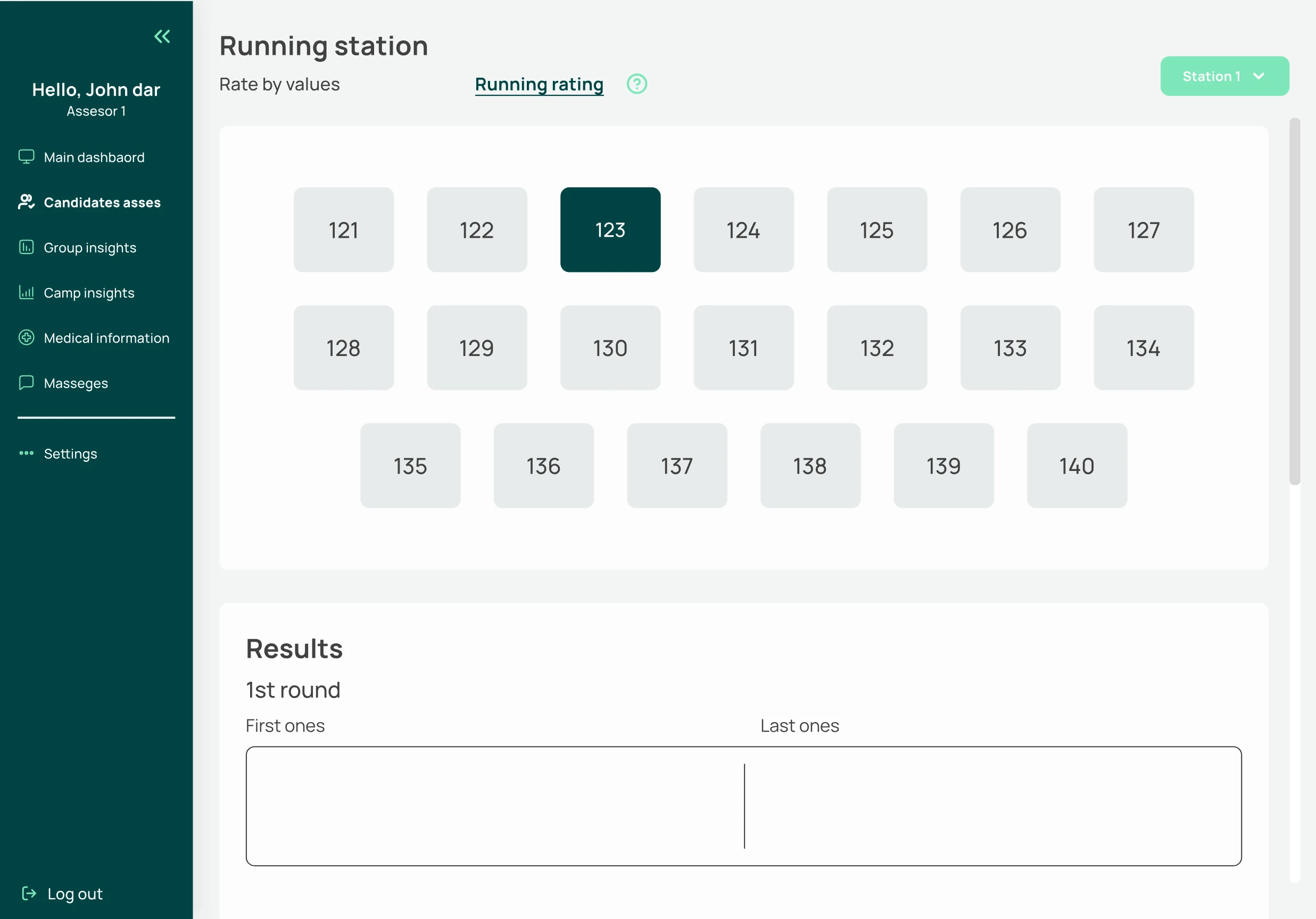
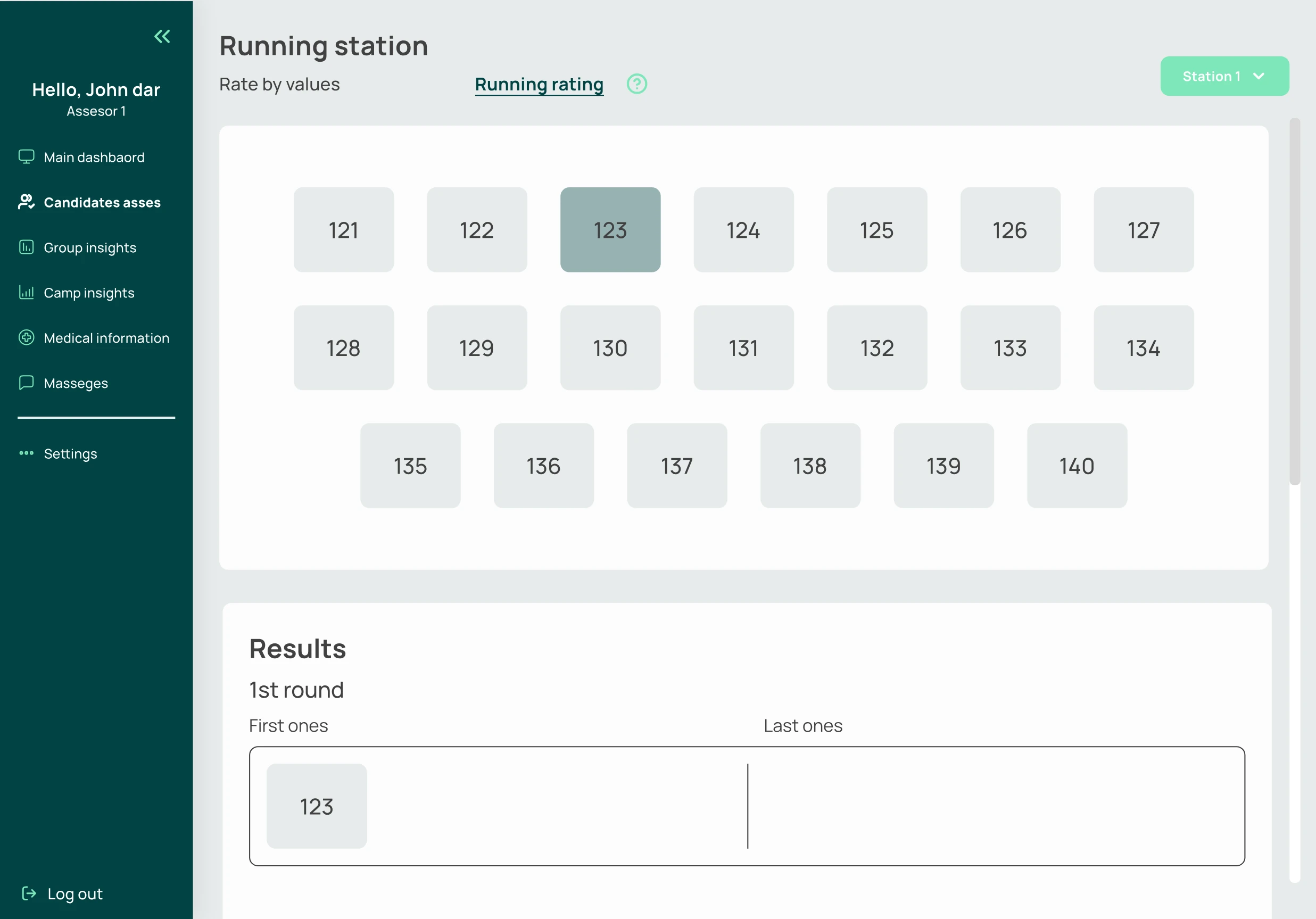
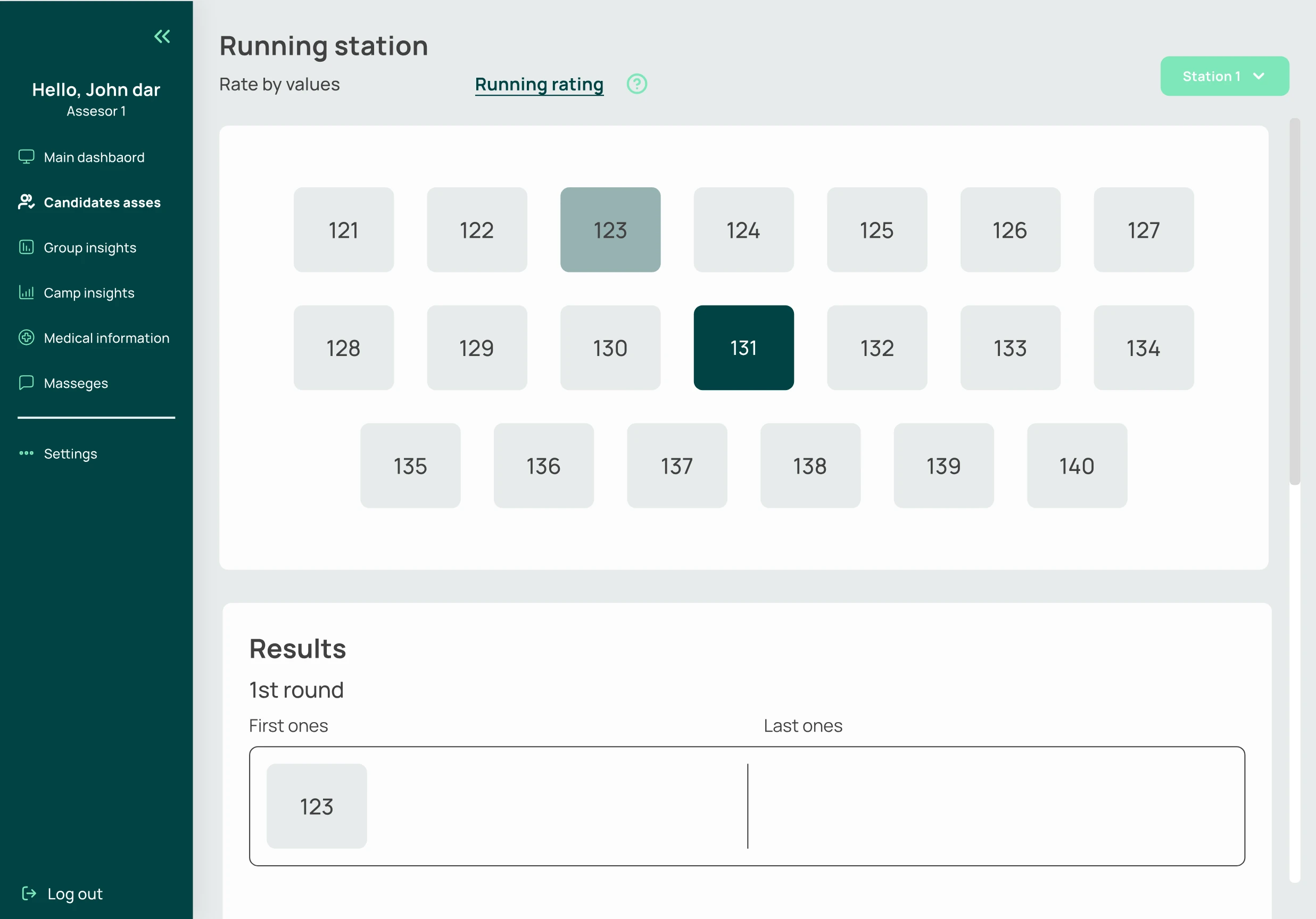
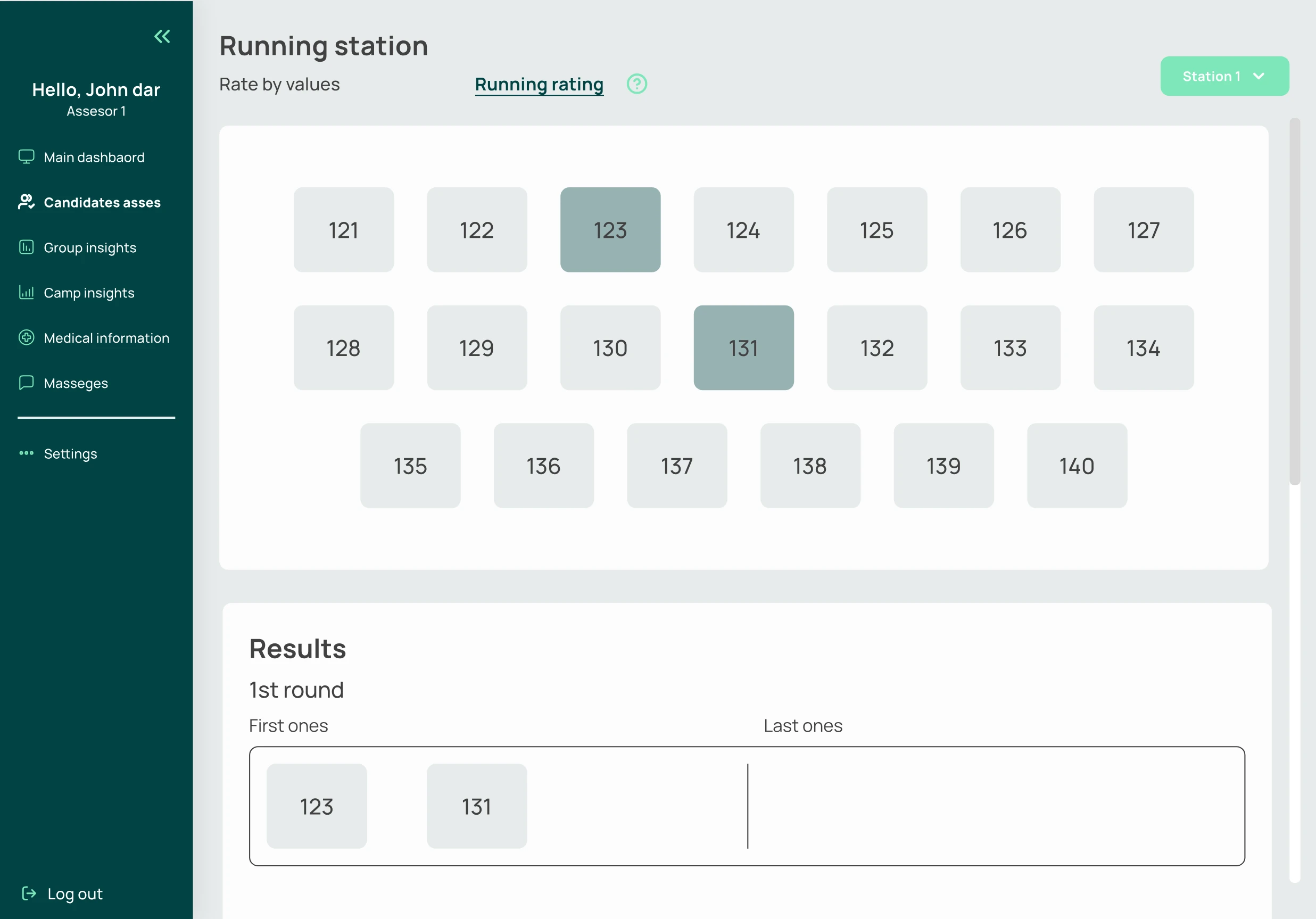
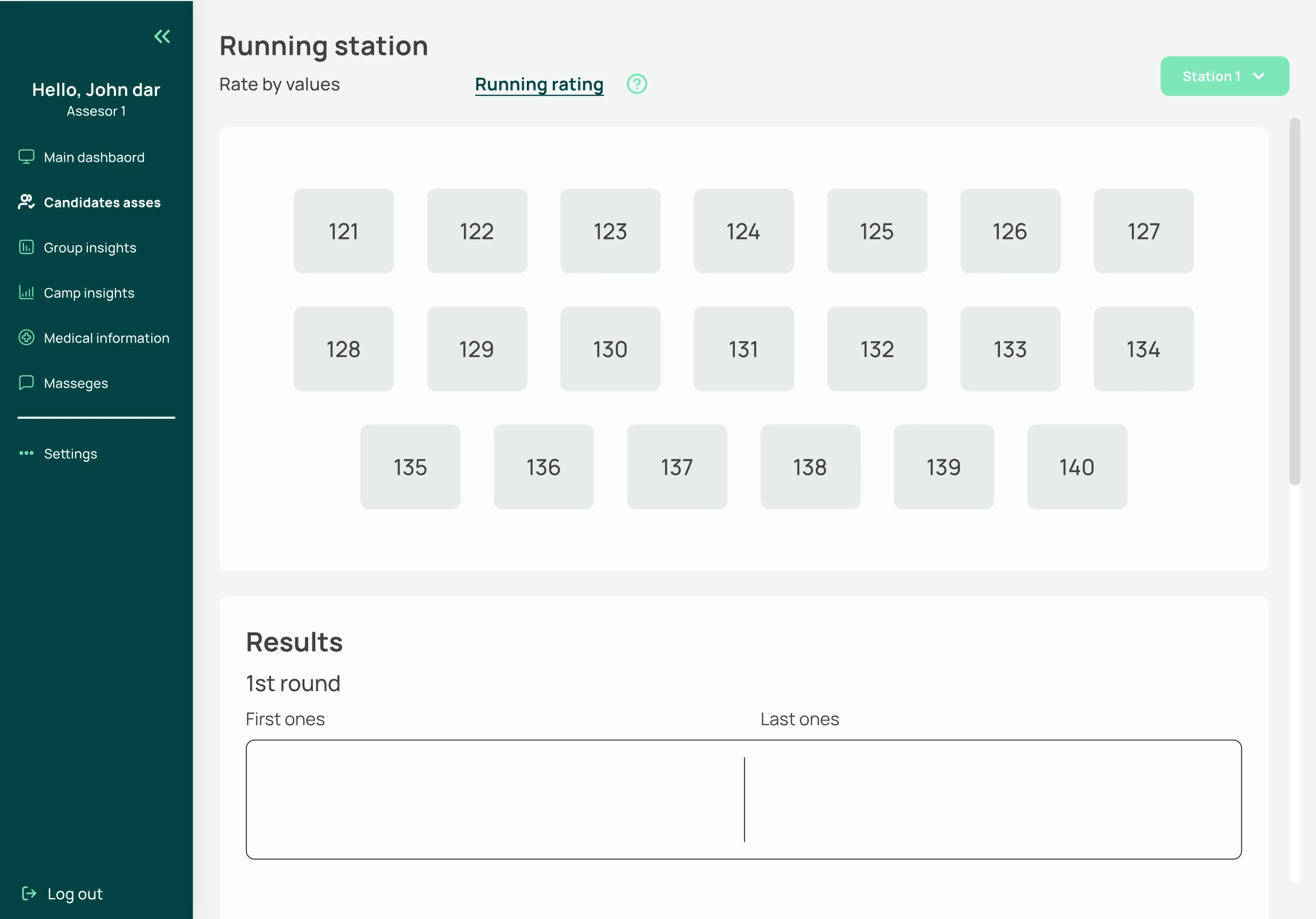
The running station

Tap candidates in the order they arrive. No more circles and numbers on paper.
Evaluation and insights

Pick a candidate from the list to open their evaluation. The switcher at the top right moves between the day's stations.
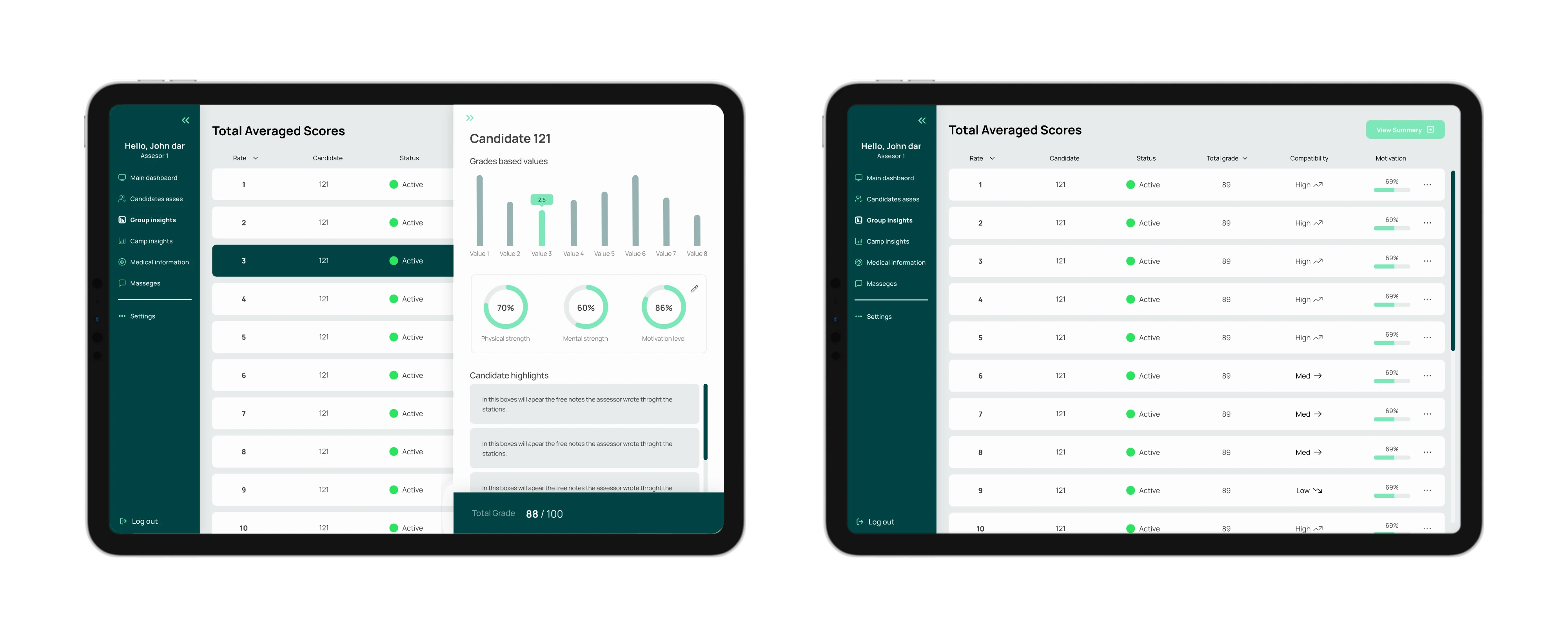
Evaluation and group insights screens
Human control

The system does the math. A commander makes the call.

Enforced order

Scores unlock after field data

The candidate's summary score stays locked until the station data, like sprint times, is entered. Then the system aggregates everything into one view.

Human sign-off

A manual final check

When grading finishes, the row changes state, but a commander still signs off. These scores decide a soldier's placement, so full automation would create anxiety and distrust.

Outcome

From paper and meetings to live data.

30 min3 hrs
end-of-camp sync meeting, down from 3 hours. The data now arrives already aligned.
Live
candidate scoring for assessors, available for the first time.
0
paper logs, replaced by one digital field interface.
Learned

Observe the field. Automate the math, not the decision.

Interviews aren't enough in the field. The sprint station's hand-drawn race order only showed up when I watched the camp live, and it became one of the app's key screens.

Keep people in charge of high-stakes calls. Automating aggregation removed hours of work. Keeping the final sign-off manual is what made commanders trust the system.